

What Is Designer Receiving? A Guide for Interior Designers and Their Clients

Designer receiving is a warehouse-based service that receives, inspects, stores, and delivers furniture and decor ordered for an interior design project before it reaches the client’s home. A receiving warehouse takes delivery of items as they arrive from dozens of separate vendors, checks each one for damage, logs it in a tracked inventory, and holds it until the full project is ready for a single coordinated delivery. Element Moving & Storage provides designer receiving for interior designers and their clients across Dallas and the surrounding Dallas–Fort Worth metroplex. This guide explains what the service includes, why designers rely on it, and what it means for the homeowner waiting on a finished room.

Designer receiving in-depth
Designer receiving is the managed intake of design-project goods at a third-party warehouse rather than at the client’s residence. The service exists because a single design project pulls items from many sources at different times: a sofa from one manufacturer, sconces from another, a rug shipped freight, and accessories from a boutique. Sending each delivery to the client’s home creates a stream of boxes, missed delivery windows, and unopened cartons that no one has inspected.
A receiving warehouse solves that by acting as the single destination for everything. The warehouse receives each shipment, inspects it on arrival, and stores it until the project is complete. The designer gets one clean delivery and installation instead of weeks of piecemeal drop-offs. The term white-glove receiving refers to the same service, with an emphasis on careful handling of high-value and fragile items.
What the receiving process includes
The receiving process consists of a fixed sequence of steps that every item passes through, regardless of its origin
- . Receipt. The warehouse accepts delivery from the freight carrier or vendor and signs for the shipment against the bill of lading.
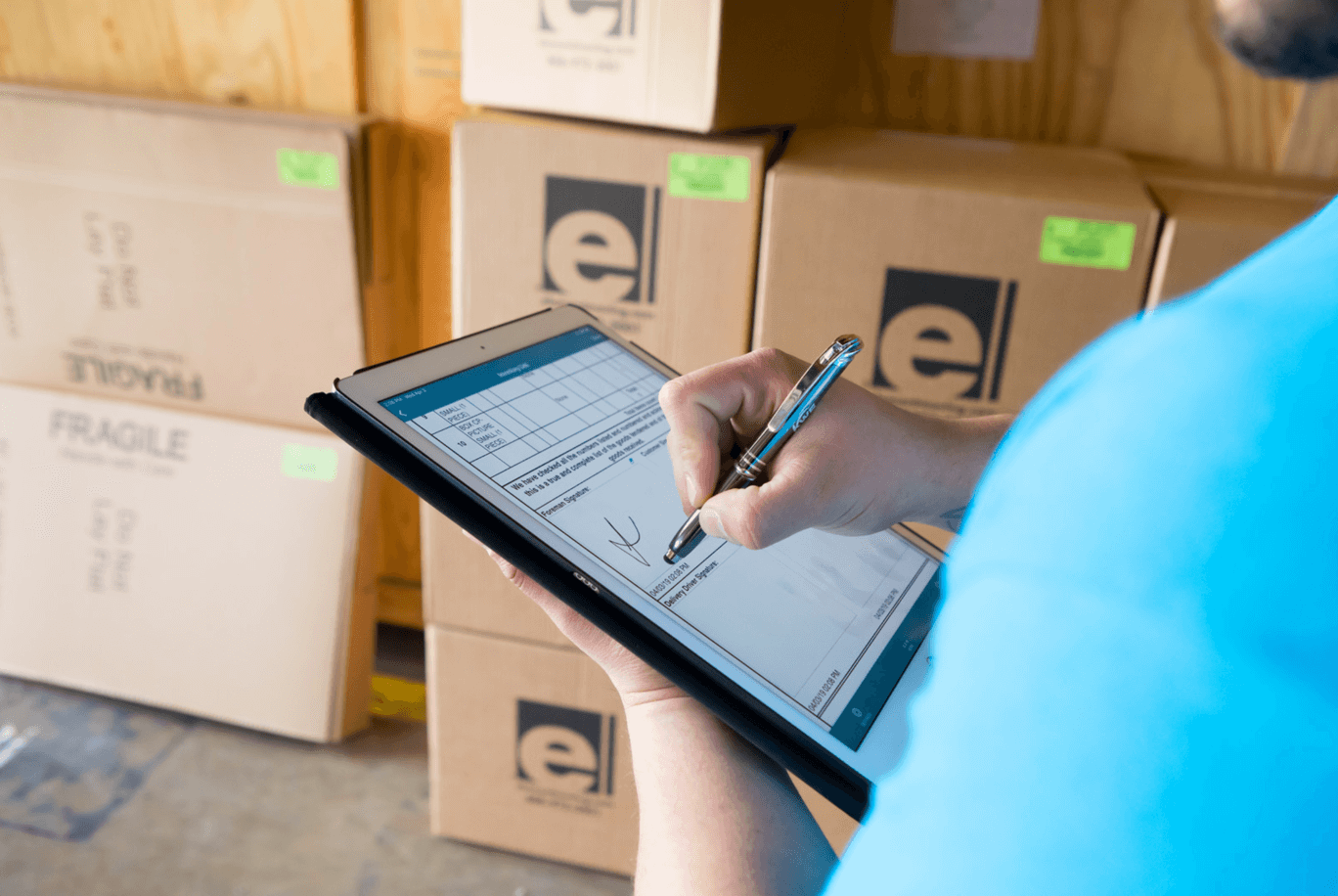
- Inspection on Receipt. A crew member unpacks and examines each item for damage, defects, and shortages before the carrier leaves, so any problem is documented at the point of handoff.
- Documentation. The warehouse photographs each piece, logs its condition, and files a claim or vendor notice when an item arrives damaged.
- Inventory tracking. Each item is tagged and entered into a tracked inventory tied to the specific project, so the designer can see what has arrived and what is still outstanding.
- Storage. Items are wrapped and stored, often in a climate-controlled space, until the project is ready.
- Consolidation and staging. When the project is complete, the warehouse gathers all items for the room or home and stages them for a single delivery.
- Delivery and installation. A crew delivers the items to the residence, places and assembles furniture, and removes the packing debris.
Inspection on Receipt is the step that makes receiving valuable. A damaged headboard discovered at the warehouse can be replaced before installation day. The same headboard, when unwrapped in the client’s bedroom weeks after delivery, often falls outside the vendor’s claim window, delaying the entire project.
Types of storage and handling within receiving
Received items are wrapped and stored according to their value and fragility, not all in the same way.
- Blanket wrap. Furniture is padded with moving blankets and stretch wrap for general protection during storage and transport: this suits case goods, upholstered furniture, and most everyday pieces.
- Crating. Fragile, high-value, or irregular items such as mirrors, glass tabletops, stone, and fine art are built into custom wooden crates for rigid protection.
- Climate-controlled storage. Wood furniture, leather, and art are held in a temperature- and humidity-stable space to prevent warping, cracking, and mildew during longer holds.
How does a designer receiving differ from self-storage and freight warehousing
Designer receiving differs from self-storage in that self-storage gives the renter an empty unit, with no inspection, no inventory, and no delivery. The renter hauls and stacks their own goods, and the facility never opens a box. A design receiving differs from a freight warehouse because a freight warehouse moves pallets in bulk and measures success in throughput, not in the condition of an individual sconce. Designer receives handles items at the piece level, inspects each one, and treats the project, not the pallet, as the unit of work.
Why do interior designers use a receiving warehouse?
A receiving warehouse removes the logistics burden that would otherwise consume a designer’s time and risk the client relationship. The designer protects the install reveal because the client never sees a half-finished room or a pile of cartons. The designer detects damage early because inspection occurs upon Receipt rather than on the day of installation. The designer controls the timeline because every item lands in one place and ships to the home in one coordinated delivery.
Receiving also protects the designer’s reputation on the day that matters. A coordinated white-glove delivery of art, antiques, and designer pieces, with furniture placed and assembled and the debris removed, is the version of the project the client remembers.
What does a designer’s reception mean for the homeowner?
For the homeowner, the designer receives a months-long trickle of deliveries and converts it into a single finished result. The client does not field calls from freight carriers, does not store cartons in the garage, and does not discover damage after the vendor’s claim window has closed. On delivery day, a crew installs the complete room, removes the packaging, and the project is done.
Buildings add one more reason the service helps. Many high-rise and HOA-managed properties require a certificate of insurance (COI), a document proving the moving crew carries liability coverage, before any delivery into the building. A professional receiving and delivery crew supplies the COI and books the freight elevator, which a series of individual vendor deliveries rarely can.
Frequently asked questions
What is a receiving warehouse? A receiving warehouse is a facility that accepts, inspects, stores, and delivers goods on behalf of a client, rather than renting out empty storage space. For interior design projects, it consolidates items from multiple vendors into a single tracked inventory.
What happens if an item arrives damaged? The warehouse documents the damage during receipt, photographs the item, and notifies the vendor or files a claim. Catching damage at the warehouse allows a replacement to arrive before the project is installed.
Who pays for the designer receiving, the designer, or the client? Either arrangement is common. Some designers bill receiving and delivery to the client as a project cost, and others fold it into their fee. The warehouse invoices its client, who is usually the designer.
How long can items stay in receiving storage? Items can be held for the length of the project, from a few weeks to several months. Climate-controlled storage protects wood, leather, and art during longer holds.
How is the designer receiving different from regular storage? Regular self-storage gives you an empty unit and never inspects or tracks your goods. The designer receives and inspects every item upon arrival, maintains a project-tracked inventory, and delivers and installs the items when the project is ready.
A designer receives a fragmented stream of vendor shipments into one inspected, stored, and coordinated delivery, for designers planning a project in the Dallas–Fort Worth area, Element Moving & Storage handles the full process through its interior designer receiving service in Dallas, backed by designer furniture storage and furniture receiving and delivery.
Ready To Move?
We Make It Easier.
A design install goes wrong when dozens of vendor shipments land at the client's house on different days, and a receiving warehouse is what prevents that. Get a free quote from Element for furniture receiving, inspection, storage and delivery on your next Dallas project.
get a free quote