
Self-Storage Unit vs PODS in Dallas: Cost, Heat and Access

A standard self-storage unit usually costs less per month than a PODS container. The container comes to your driveway, so there is no rental truck and you load once. A standard 10×10 unit in Dallas averages about $134 a month, or $175 climate-controlled. PODS’ 2025 national average for its comparable 12-foot container is $159 a month on your property and $210 at a PODS storage center. PODS containers are not climate-controlled; self-storage facilities that offer it usually charge extra.
In Dallas, that last point often decides it. DFW’s normal high is 95.6°F in July and 95.8°F in August, according to the National Weather Service. This guide compares a self-storage unit and a portable storage container on cost, heat and access, then covers a third option: a mover that stores what it moves.

Self-Storage Units: How They Work, Pros and Cons
A self-storage unit is a room you rent by the month at a storage facility. Getting your things there is up to you: usually a borrowed pickup or a rented truck, and carrying every box and dresser in yourself. After that, you come and go within the facility’s access hours.
What works in its favor:
- Size choice. Facilities rent everything from a 5×5 closet to a 10×30 room, according to PODS’ own comparison table. PODS’ largest container, the 16-foot, matches only a 10×15.
- Usually the lowest rent. Size for size, a standard unit costs less a month than a container kept at a PODS storage center (see the cost table).
- Climate control, if you pay for it. Many facilities offer it for an additional cost, per the same table. In Dallas it adds about $41 a month to a 10×10.
- No appointment. You can stop by whenever the facility is open.
What works against it:
- You handle everything twice. Load at home, unload at the unit, then do both again on the way out.
- Every visit is a drive. Need the winter coats in November? That is a trip.
- The truck bill comes twice too, once going in and once coming out, with fuel on top.
- Units outlive their purpose. A unit rented for a two-month remodel can still be on the card statement a year later, because emptying it takes a free Saturday and another truck.
PODS Containers: How They Work, Pros and Cons
PODS is one brand of portable storage container. Others work on the same idea, so the climate, access and placement questions below apply to any of them.
PODS sets a steel-frame container on your driveway and leaves it there while you load at your own pace. Then it stays on your property, or PODS hauls it to a storage center or straight to your new address. For Dallas, PODS lists its storage center in Carrollton. Containers come in 8, 12 and 16 feet; the 12-foot is for local moves and storage only.
What works in its favor:
- No rental truck. The container does the hauling.
- One round of loading if it goes straight to the next house.
- No clock running. You can pack the garage on a Tuesday night and the kitchen on Saturday.
- Storage bundled with a move. PODS includes one month of storage in the price of a PODS move.
What works against it:
- Higher rent at a storage center. Kept at a PODS storage center, a container costs more a month than a standard unit of the same size.
- Three sizes only. PODS itself says a larger household may need more than one container.
- No climate control. See the next section.
- It needs somewhere to sit. The container needs a spot on your property that a delivery truck can reach. Some HOA covenants restrict driveway containers, so read yours before booking, and ask the city before anything goes on the street.
- Visits need an appointment at a storage center (see the FAQ).
Are PODS Climate Controlled?
No. The PODS comparison table lists climate control for its containers as “Not available,” and PODS’ storage cost guide says outright that it “doesn’t offer climate-controlled storage.”
PODS also draws a line between two terms. Climate control manages both temperature and humidity; temperature control manages temperature only. PODS describes its containers as weather-resistant but not climate-controlled, and says they may not be the best choice for temperature-sensitive items. Put plainly, PODS does not sell its containers as air-conditioned or temperature-controlled; weather-resistant is the most it claims for them. Storing it indoors at a PODS storage center doesn’t change that answer (see the FAQ).
What a Dallas Summer Means for Stored Things
The National Weather Service normals for DFW, based on 1991 to 2020, put the average high at 91.5°F in June, 95.6°F in July, 95.8°F in August and 88.6°F in September. DFW also averages 20.2 days a year at 100°F or hotter.
There does not seem to be an official industry standard for climate-controlled storage. A commonly cited range, which PODS repeats on its climate-controlled storage page, is 55°F to 78°F with humidity at or below 55%. A normal August afternoon at DFW runs about 18 degrees above the top of that range, and that is the outdoor air temperature.
What Should Not Sit Through a Texas Summer in a Container
PODS’ own list of things that may need climate-controlled storage covers fine art, delicate or antique fabrics, paper items such as books, electronics, discs and records, and antique wood furniture. On the most valuable of these, PODS goes further. It recommends against storing valuable items such as fine art, along with perishable goods, and says its lease agreement does not allow them in its containers.
If your list includes art, see Element’s fine art storage. For heirloom wood furniture, our guide to moving antiques safely covers how to protect it in transit.
Element’s own Dallas storage is climate-controlled. The facility keeps temperature and humidity levels consistent, and the third option below explains how it works.
PODS vs Storage Unit Cost in Dallas
Compare like with like. PODS matches its own sizes to storage units: the 12-foot container to a 10×10 and the 16-foot to a 10×15. The table puts PODS’ 2025 U.S. averages next to average Dallas self-storage rates, with Element’s storage alongside.
| PODS container (2025 U.S. average) | Self-storage unit (Dallas average) | Element storage | |
|---|---|---|---|
| Monthly rent, mid-size (12-ft container / 10×10 unit) | $159 on your property, $210 at a PODS storage center | $134 standard, $175 climate-controlled | Quoted per job after a walkthrough |
| Monthly rent, large (16-ft container / 10×15 unit) | $175 on your property, $239 at a PODS storage center | $182 standard, $251 climate-controlled | Quoted per job |
| Delivery and pickup | About $80 each way; PODS says it can often waive these, depending on rental length | None; you bring the truck or trailer, and the fuel | Element’s crew picks up and delivers |
| Climate control | Not offered | Extra where offered (about $41 a month more on a 10×10) | Included |
| Who loads and unloads | You | You, at both ends, twice | Element’s crew |
| Getting to your things | Any time on your property; by appointment with 24 to 72 hours’ notice at the Carrollton storage center | During the facility’s access hours | Arranged with the team |
The PODS figures are the national averages in PODS’ July 2025 storage cost guide, linked above; PODS publishes no Dallas price. The self-storage figures are average Dallas rates as listed in October 2026.
Three months of storage away from home, for a mid-size load, looks like this:
- PODS 12-foot container at a storage center (2025 U.S. average): $630 in rent, plus delivery and pickup fees that PODS says average $80 each way and can often be waived, depending on how long you rent.
- Dallas 10×10, climate-controlled: $525.
- Dallas 10×10, standard: $402.
The self-storage lines leave out the truck, the fuel and a day of lifting at each end. On rent alone, a standard unit beats a container kept at a PODS storage center, at both sizes. The container pulls ahead when it also does the move, because PODS folds a month of storage into a PODS move. The cheapest PODS option is leaving the container on your own driveway, which also means leaving it outdoors through a Dallas summer.
Element prices storage for your items and timeline after a walkthrough, so there is no single monthly rate to put in that column.
Which Storage Option Should You Choose?
The right one depends on what you are storing, for how long, and how often you need it back.
Choose Self-Storage If
- You will be back often for things you need
- You want the lowest monthly rent
- You need more room than a 16-foot container holds
- You have a truck, or don’t mind renting one twice
- You will pay the climate add-on for anything heat-sensitive
Choose PODS If
- You are moving and need storage in between, without renting a truck
- You want several days to load at your own pace
- Your driveway can take a container and your HOA allows one
- What you are storing can handle the heat: patio furniture, tools, holiday boxes
Both lists assume one thing: that you do the lifting.
A Dallas Alternative to PODS: Mover-Managed Storage
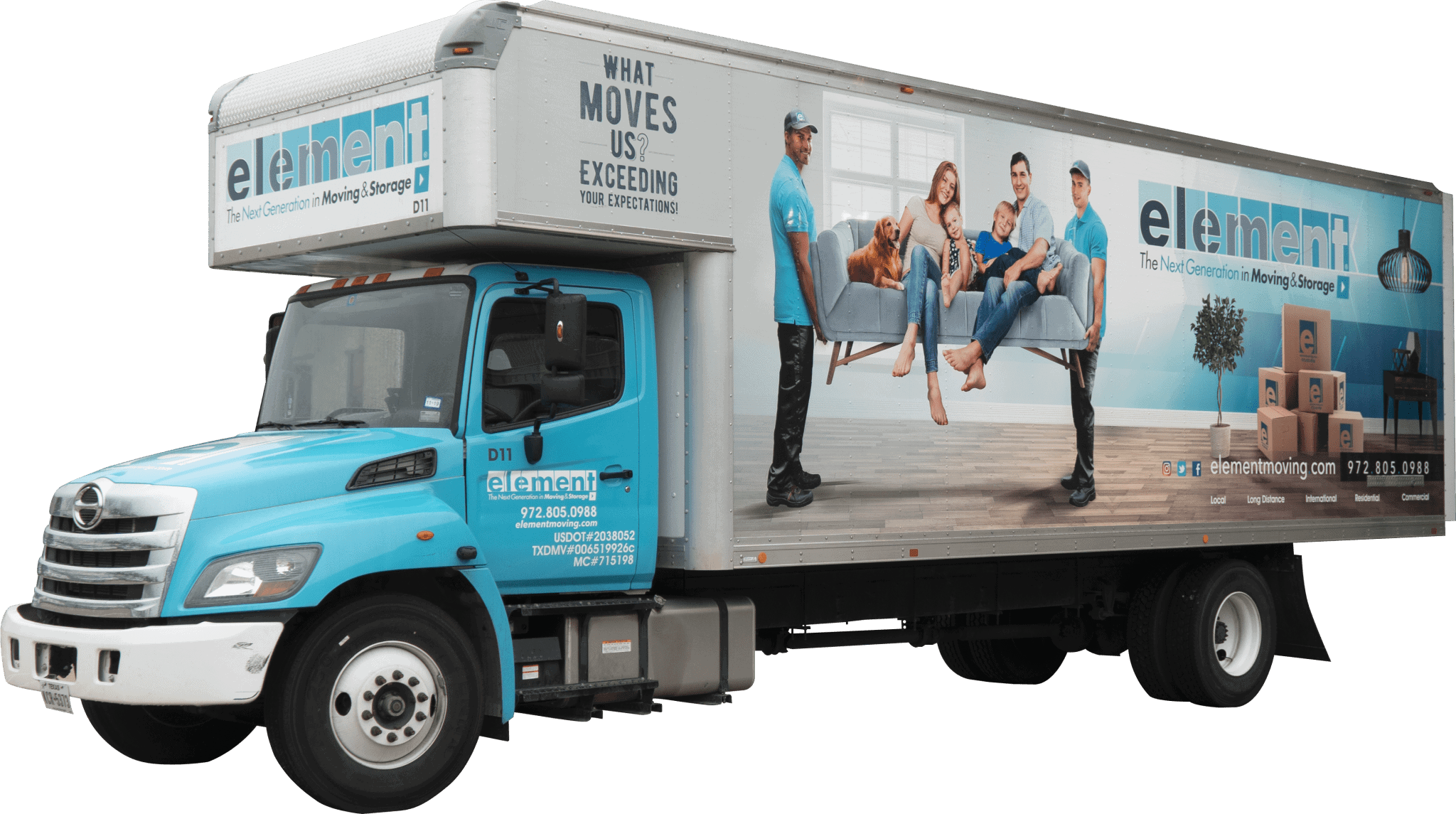
There is a third option this comparison leaves out: mover-managed storage. Element’s Dallas storage is climate-controlled, Element’s crew moves the items in and out, and you never rent a truck or a pod.
As a Dallas moving company that stores what it moves, Element runs it like this:
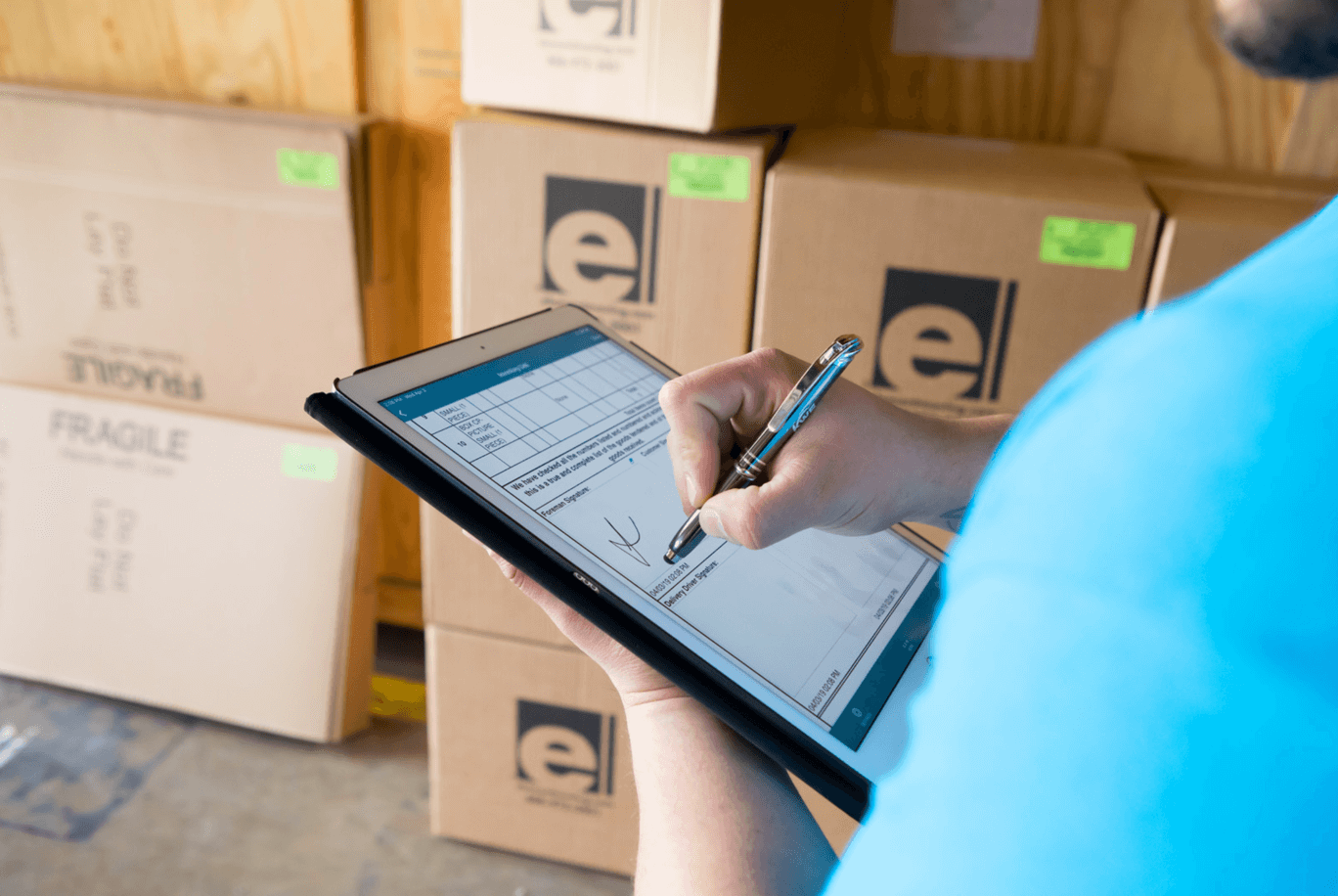
- The crew packs and wraps your things, makes a detailed inventory and takes everything to Element’s Dallas warehouse.
- Your belongings go into your own individual container rather than shared warehouse space. The container holds only your items, and every item is tagged with your customer information.
- The facility keeps temperature and humidity levels consistent and is covered by video surveillance and motion alarms.
- When you are ready, the crew delivers to your new home, unpacks and places everything, and checks it against the inventory.
It suits the in-between stretches: a gap between closing dates, a remodel that empties a few rooms, downsizing before you know what fits the next place, and anything on the heat-sensitive list above.
The trade-off is simple. The quote includes the crew’s time at both ends, which a self-storage renter supplies with their own back. Getting things back is arranged with the team. The storage page explains how climate-controlled storage in Dallas works with Element, from the first walkthrough to delivery day.
Frequently Asked Questions
How Much Does a PODS Container Cost per Month?
PODS says rent starts around $149 a month, varying by size and location. Its July 2025 cost guide gives U.S. averages of $159 a month for a 12-foot container on your property and $175 for a 16-foot, rising to $210 and $239 at a PODS storage center. Delivery and pickup fees average $80 each way, and prices vary by city and season.
Is It Cheaper to Rent a Pod or a Storage Unit?
On rent, a standard storage unit is usually cheaper. A standard 10×10 in Dallas averages about $134 a month, while PODS’ 2025 national average for the comparable 12-foot container is $210 at a storage center. A pod can come out ahead when it replaces the moving truck, because PODS includes one month of storage with a PODS move.
Are PODS Storage Facilities Climate Controlled?
No. PODS keeps stored containers inside its own storage centers and calls the container plus the building a “double layer” of protection against water damage, pollen and other air contaminants. It also says it “doesn’t strictly follow climate control standards.” For heat-sensitive items, choose a climate-controlled unit or mover-managed storage.
Are PODS Stored Indoors?
At a PODS storage center, yes: PODS describes its centers as secure indoor facilities. On your property, the container sits outside on the driveway for as long as you keep it there. PODS itself recommends moving it to a storage center if you need storage for more than a few weeks. Indoors, though, is not the same as climate-controlled.
Can You Access a PODS Container in Storage?
Yes, by appointment. PODS storage centers are not open to the public, but PODS says you can visit your container as often as you need with no extra charge, given notice of usually 24 to 48 hours. Its Dallas location page asks for at least 24 hours, and sometimes up to 72, before a visit to the Carrollton center.
What Can’t Be Stored in a PODS Container?
PODS prohibits hazardous materials, flammable or combustible liquids and solids, compressed gases, perishables, biological substances, explosives, radioactive materials and illegal items, according to its containers and storage FAQ. Its lease also excludes valuable items such as fine art. If that rules out your art or antiques, they belong in climate-controlled storage instead.
Skip the Truck and the Pod
If what you are storing can’t sit through a Dallas August, or you would rather not load it twice, ask us for a storage quote. The crew packs it, stores it and brings it back when you are ready.
Ready To Move?
We Make It Easier.
A self-storage unit and a portable container both leave you doing the loading, the driving, and the guessing about climate. Get a free quote from Element for climate-controlled storage in Dallas and let the crew handle the loading.
get a free quote