

Living in Dallas Without a Car

Here’s the honest verdict up front: you can live in Dallas without a car, but only in a handful of specific pockets — and only if your job, your groceries, and your social life line up with them. In the connected core of Downtown, Uptown, and Deep Ellum, people go years without owning a vehicle. Almost everywhere else, Dallas is built around driving, and fighting that layout gets expensive and exhausting fast. Below: the neighborhood tier list car-free residents actually agree on, what DART can and can’t do, the real monthly math against car ownership, and the factor out-of-town guides always skip — summer.
Is Dallas walkable?
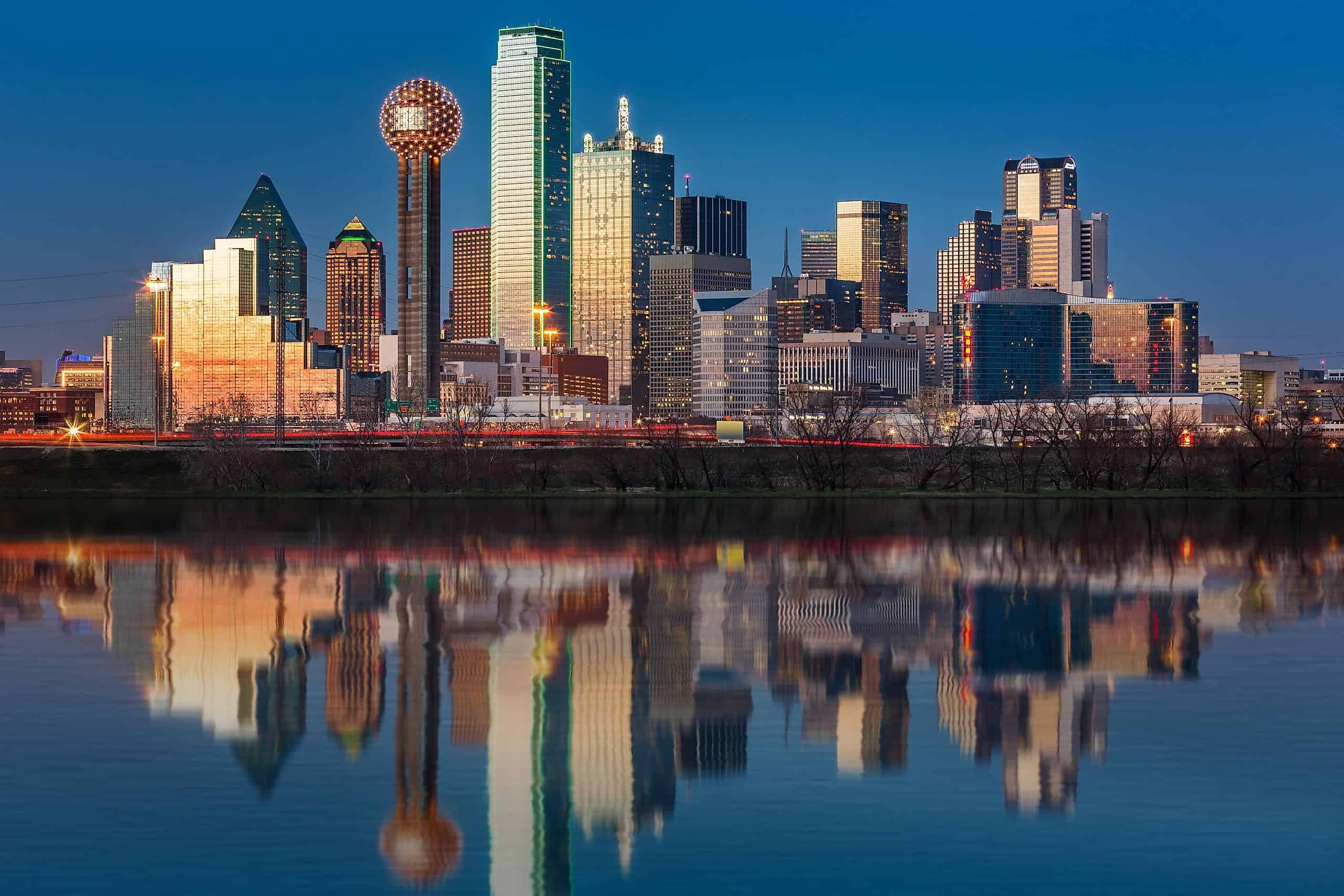
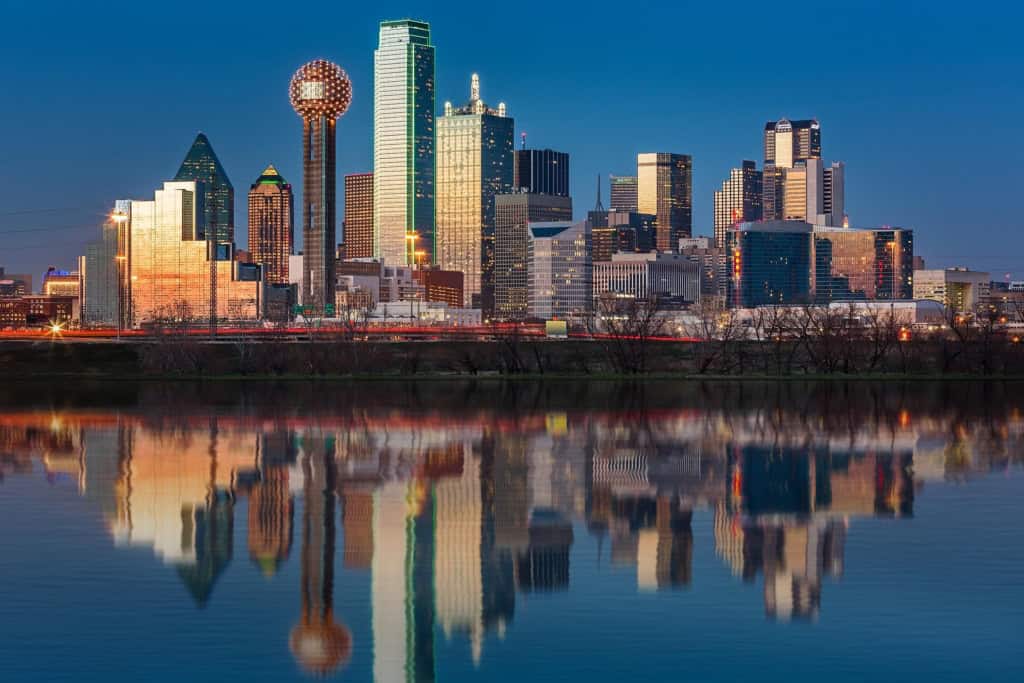
As a whole city? No. Dallas’s citywide Walk Score sits in the mid-40s — firmly car-dependent territory. But the average hides the real story: Downtown Dallas scores in the low 90s and Uptown even higher, which is “walker’s paradise” range by Walk Score’s own scale.
The pattern car-free residents describe over and over is a 95/5 city. Roughly 95 percent of Dallas is car country. The other 5 percent — a chain of interconnected districts running from the Main Street core through the West End, Arts District, East Quarter, and Deep Ellum, then north through Victory Park, Uptown, and the West Village to Cityplace — is genuinely walkable, dense with restaurants, gyms, and now full-size grocery stores. Close to one in ten Dallas households already gets by without a vehicle, so this is not a theoretical lifestyle.
The catch: nobody lands in the walkable 5 percent by accident. You have to pick it on purpose. And if you’re arriving from a transit-rich coastal city, transportation is only one layer of the adjustment — our guide to moving to Dallas from a blue state covers the rest.
Which Dallas neighborhoods work without a car?
Car-free residents sort the city into three tiers, and they’re remarkably consistent about it:
| Tier | Neighborhoods | The reality |
|---|---|---|
| Works | Downtown (Main Street District, West End, Arts District, East Quarter), Uptown and the West Village, Deep Ellum, Victory Park, Cityplace | Walk to work, groceries, and nightlife. Rail, a free trolley, and scooters on hand. Residents report going two to fifteen years without a car here. |
| Workable with compromises | Knox-Henderson, Lower Greenville and the M Streets, Old East Dallas, Oak Lawn, Bishop Arts, Mockingbird Station, downtown Plano and near-station Richardson | Walkable blocks exist, but you’ll lean on a monthly rideshare budget, and DART schedules will shape your day. Best with a remote or downtown job. |
| Don’t try | Frisco, Arlington, far North Dallas, Irving, and any suburb-to-suburb commute | Hourly buses, missing sidewalks, and transit trips that triple your commute. Residents who try it here almost always buy a car within months. |
Tier 1 is the real deal. Downtown residents describe walking 15 minutes to work and having multiple full-size grocery stores — not corner marts — within walking distance; our Downtown Dallas apartment guide breaks down the buildings. Uptown adds the Katy Trail, a Whole Foods, and the free M-Line trolley connecting you to Downtown and the Cityplace rail station — the full picture is in our guide to moving to Uptown Dallas.
Tier 2 works if your job cooperates. Bishop Arts has the fare-free Dallas Streetcar to Union Station. East Dallas is more bikeable than its reputation — residents route through quiet side streets — but grocery runs and nightlife will pull an Uber budget out of you. Near-station Richardson and downtown Plano work on a pure rail-commute-to-downtown pattern.
Tier 3 is where the experiment dies. One commonly repeated experience: a 20- to 30-minute drive to a suburban office becomes a 90-minute train-and-bus odyssey each way. How these areas lean politically and culturally is a separate question — we’ve mapped that in our Dallas neighborhoods political lean guide.
How Much Do You Need to Make to Live in Dallas by Household Type?
Works: Downtown (Main Street District, West End, Arts District, East Quarter), Uptown and the West Village, Deep Ellum, Victory Park, Cityplace. Residents can walk to work, groceries, and nightlife, with rail, a free trolley, and scooters available. Residents report going two to fifteen years without a car here.
Workable with compromises: Knox-Henderson, Lower Greenville and the M Streets, Old East Dallas, Oak Lawn, Bishop Arts, Mockingbird Station, downtown Plano, and near-station Richardson. Walkable blocks exist, but you’ll lean on a monthly rideshare budget, and DART schedules will shape your day. Best with a remote or downtown job.
Don’t try: Frisco, Arlington, far North Dallas, Irving, and any suburb-to-suburb commute. There are hourly buses, missing sidewalks, and transit trips that triple your commute. Residents who try it here almost always buy a car within months.
Tier 1 is the real deal. Downtown residents describe walking 15 minutes to work and having multiple full-size grocery stores — not corner marts — within walking distance; our Downtown Dallas apartment guide breaks down the buildings. Uptown adds the Katy Trail, a Whole Foods, and the free M-Line trolley connecting you to Downtown and the Cityplace rail station — the full picture is in our guide to moving to Uptown Dallas.
Tier 2 works if your job cooperates. Bishop Arts has the fare-free Dallas Streetcar to Union Station. East Dallas is more bikeable than its reputation — residents route through quiet side streets — but grocery runs and nightlife will pull an Uber budget out of you. Near-station Richardson and downtown Plano work on a pure rail-commute-to-downtown pattern.
Tier 3 is where the experiment dies. One commonly repeated experience: a 20- to 30-minute drive to a suburban office becomes a 90-minute train-and-bus odyssey each way. How these areas lean politically and culturally is a separate question — we’ve mapped that in our Dallas neighborhoods political lean guide.
Can DART actually get you around?
On paper, DART is impressive: more than 90 miles of light rail across the Red, Blue, Green, and Orange lines — among the longest light-rail networks in the country — plus the TRE commuter rail toward Fort Worth and the new Silver Line, which opened in late 2025 and runs 26 miles from Plano through Richardson, Addison, and Carrollton to Grapevine and DFW Airport. A $126 Local monthly pass covers rail, buses, and GoLink, DART’s on-demand van zones.
In practice, DART is corridor-shaped, not web-shaped. If your life runs along a rail line into downtown — Richardson to the office, Cityplace to Deep Ellum — it genuinely works. If your trip runs crosstown without touching a rail corridor, you’re in transfer purgatory.
The realities residents flag:
- Frequency is the tax. Trains often run about 20 minutes apart, and off-peak buses can be hourly. Miss one and your afternoon is rearranged. The Silver Line runs every 30 minutes at peak, hourly otherwise.
- Plan-ahead is mandatory. Car-free veterans describe checking schedules the way drivers check traffic.
- Comfort varies. Most rides are uneventful; occasional rough moments happen. Standard big-city transit awareness applies.
- The upside is real. Transit time is laptop-and-phone time, and nobody misses hunting for parking.
Pro moves from long-term car-free residents: live within a 15-minute walk of a station, use a bike or scooter for the last mile, and check whether your address falls inside a GoLink zone — those on-demand vans are covered by your pass and will even take a folding bike.
How much do you save going car-free in Dallas?
This is where the case gets strong. AAA’s 2025 numbers put average new-vehicle ownership at $11,577 per year — roughly $965 per month after accounting for depreciation, finance charges, insurance (averaging $1,694 per year for full coverage), fuel, maintenance, and registration. Even a paid-off older car still burns several hundred dollars a month, and many urban Dallas buildings charge extra for parking on top.
Now stack the car-free budget:
- DART Local monthly pass: $126, covering rail, bus, and GoLink.
- Rideshare: the swing variable. Well-positioned residents report needing only a handful of Ubers a month; heavy users — the ones effectively Ubering as a lifestyle — report spending $500 or more once delivery fees are factored in.
- Grocery and household delivery fees, which most car-free residents treat as a fixed utility.
- An occasional weekend rental car for the IKEA run or the out-of-town trip.
For someone living in Tier 1 with a walkable commute, the whole stack typically lands in the $300–$600 range — several thousand dollars a year ahead of the average cost of car ownership. Residents who ran their own math consistently report the same conclusion: even liberal rideshare use beats the combined car payment, insurance, gas, maintenance, and parking. The savings only evaporate when you fight geography — Ubering daily from an apartment nowhere near transit is the worst of both worlds. Where transportation fits in your bigger picture is covered in our guide to the salary you need to live comfortably in Dallas.
What about the Dallas heat?
This is the factor that breaks more car-free experiments than money or transit maps. From roughly June through September, Dallas runs triple digits for stretches at a time, and residents are blunt about what 105°F does to the plan: a half-mile walk leaves you soaked, bus stops rarely have shade, and errands compress into the morning hours.
The veterans’ coping playbook is specific:
- Shift the clock. Walk, bike, and run errands before 10 a.m. in July and August.
- The spare-shirt trick. Transit commuters genuinely pack a second shirt and change on arrival.
- Bike instead of walk. Counterintuitive but consistently reported: moving at cycling speed generates its own breeze and beats a long walk in the sun.
- Budget a summer surge. Treat extra rideshare and delivery spending in July and August as a seasonal utility bill, not a failure.
- Insulated grocery bags if your store is more than a couple of blocks away.
If you can get through your first August, you can do this year-round. Plenty of people decide they’d rather not — and that’s a legitimate answer.
When should you just keep the car?
Car-free Dallas is real, but so are the situations where it’s the wrong call. Keep the car if:
- Your job sits in a suburb or involves site visits and client meetings across the metroplex.
- You have kids with school runs and activities in different directions.
- Your social life or family life lives beyond the core — regular trips to Frisco or Fort Worth get old fast on transit.
- You simply hate planning. Car-free living rewards logistics people.
Many households opt for the hybrid: one shared car, driven a few times a month, with daily life handled on foot and by rail. If you’re keeping a vehicle, know what you’re signing up for on toll roads — our Dallas tollway and TollTag guide explains the system before your first surprise invoice.
FAQ: Car-free living in Dallas
Can you get to DFW Airport without a car?
Yes, and it’s one of DART’s best tricks. The Orange Line runs directly to DFW Terminal A, and since late 2025 the Silver Line connects Plano, Richardson, Addison, Carrollton, and Grapevine to the airport. Your $126 monthly pass also covers the TRE as far as CentrePort/DFW Airport Station.
Is DART safe to ride?
The consensus from daily riders: mostly uneventful, occasionally uncomfortable. People who ride for years report a handful of sketchy moments, not a pattern of danger. Ride like you would in any big city — aware, headphones low at night — and it’s a manageable trade-off.
How do you handle groceries without a car?
The two proven models are the two-block rule — choose an apartment within a couple of blocks of a full grocery store, which Downtown, Uptown, and Cityplace all allow — or the delivery backbone, where a weekly delivery covers staples and you shop small on foot. Bike saddlebags and insulated bags close the gap.
How much should you budget for Uber and Lyft?
If you live in Tier 1 with a walkable commute, residents report just a few rides a month. A realistic planning figure for most people is a fixed monthly rideshare budget of a couple hundred dollars — and even at $500 a month, heavy users note they’re still below the all-in cost of owning a car.
Moving into car-free Dallas? That's the one trip you can't DART.
Here’s the irony of going car-free: the move itself is the one journey that absolutely requires a truck. Element Moving & Storage handles Downtown high-rises, Uptown mid-rises, and every tight loading dock in between — we’ll get your life into the walkable 5 percent so you can leave the driving to us permanently. With more than 1,300 Google reviews, our Dallas local moving team makes the last drive you take the easiest one. Get your free quote today.