

How to Pack Dishes, Glasses & Kitchen Items for Moving (2026)

The kitchen is the most breakable, time-consuming room in any move, and the most likely to leave you with a box of shattered glassware if you rush it. This guide walks through how to pack plates, glasses, stemware, mugs, pots, knives, and small appliances so everything arrives in one piece, plus a money-saving trick the pros and Reddit swear by.
Quick answer: Pack plates vertically on their edges (like records) in a small or dish-pack box, wrap each dish in packing paper, and cushion glasses and stemware in divided-cell boxes. Fill every gap so nothing shifts, keep boxes under about 45 lbs, and label them FRAGILE, THIS SIDE UP. On a budget, wrap dishes in your own dish towels and clothes instead of buying bubble wrap.
Supplies you’ll need
- Small / dish-pack boxes (double-walled) + cell/divider inserts for glasses
- Packing paper (not newspaper, since the ink transfers). Why packing paper
- Bubble wrap for stemware and heirlooms
- Packing tape + permanent marker
- Dish towels, hand towels, and clothes as free padding
The 5 rules for packing kitchen fragiles
- Cushion the box first with a few inches of crumpled paper on the bottom.
- Wrap each item individually in paper or bubble wrap.
- Heaviest on the bottom, lightest on top.
- Fill all gaps so nothing moves when you shake the box.
- Don’t overpack. Stick to small boxes; a heavy dish box that’s too big will break.
How to pack, item by item
Plates & dishes
Wrap each plate in paper, then stack 4 to 6 in a wrapped bundle. Place them vertically on their edge in the box. They’re far stronger this way than stacked flat. Cushion between bundles.
Bowls
Wrap individually and nest similar sizes (with paper between). Pack bowls on their sides or in small stacks, with the heaviest at the bottom.
Glasses & stemware
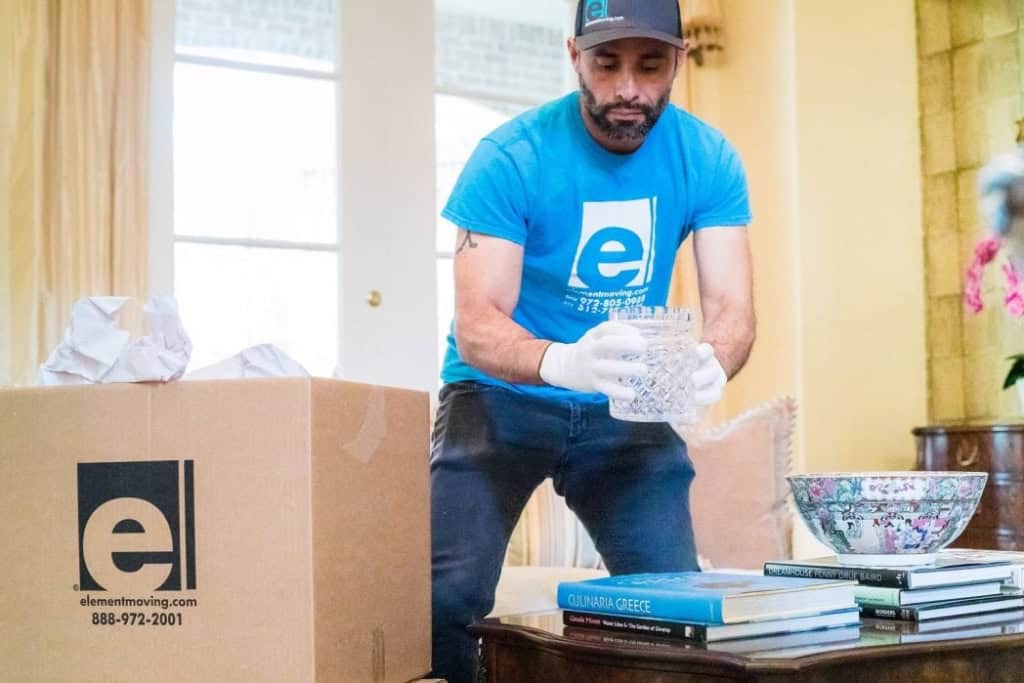
Use divided cell boxes. Wrap each glass in paper, roll, and tuck the paper inside the glass for support. Wine glasses: wrap the stem separately and box upright in cells. Never let glasses touch.
Mugs
Wrap individually (protect the handles) and stand upright in a divided box or with heavy cushioning.
Pots & pans
Nest with paper between, fill with lighter items (utensils, towels) to save space, and wrap glass lids separately.
Knives & sharp utensils
Wrap the blades in paper or a dish towel, then bundle them and clearly label them SHARP. A knife block can be wrapped whole.
Small appliances
Use original boxes if you have them; otherwise, wrap, secure cords, and box with padding. Empty and dry anything with water reservoirs.
Fine china & heirlooms
Double-wrap in paper and bubble wrap, use a dedicated dish-pack box with dividers, and consider professional packing for irreplaceable sets, especially for a long-distance move.
Pantry & food
Seal opened dry goods in zip bags, tape liquid lids, and don’t move perishables or anything in glass jars that can leak. Use up the freezer before moving day.
The money-saving “wrap in clothes” trick
Short on bubble wrap? Wrap plates, glasses, and bowls in your dish towels, hand towels, and soft clothes. You protect the breakables and pack your linens in the same box, so you use fewer boxes and waste less. It’s one of the most-upvoted dish-packing tips on Reddit, and it works.
Labeling & loading
- Mark every kitchen box FRAGILE and THIS SIDE UP.
- Note the contents and room (“KITCHEN: glasses”).
- In the truck, load dish boxes on top of heavier boxes, never under furniture. See How to Pack a Moving Truck
Mistakes to avoid
- Stacking plates flat (they crack under weight); pack them on edge instead
- Using oversized boxes that get too heavy
- Newspaper directly on dishes (ink stains)
- Leaving space; unfilled gaps cause breakage
- Forgetting to label “fragile”
Let the pros pack your kitchen
The kitchen is the room people most often hand off to professionals, because it’s slow and high-risk. Element’s packing services include fragile-only (“partial”) packing if you just want the kitchen and breakables handled. Packing is one of the add-on services that affects your total, so here’s how we calculate moving costs.
FAQ
What’s the best way to pack dishes for moving? Wrap each dish in packing paper, bundle the dishes in groups, and stand the plates vertically on edge in a small dish pack box. Fill all gaps and label fragile.
How do you pack glasses so they don’t break? Use a divided cell box, wrap each glass in paper, stuff paper inside for support, and never let glasses touch. Pack stemware upright with the stems wrapped.
Can I use towels and clothes instead of bubble wrap? Yes. Dish towels and soft clothing make great free padding for plates, bowls, and glasses, and you pack your linens at the same time.
How do you quickly pack a kitchen? Start with items you rarely use (serving dishes, specialty appliances), pack one cabinet at a time, use cell boxes for glassware, and leave only daily essentials for last. Or hire a partial packing service for the kitchen.
How do you pack knives for moving? Wrap each blade in paper or a dish towel, bundle them, label “sharp,” or wrap the entire knife block. Keep them out of boxes that kids might open.
Should I pack dishes flat or on their side? On their side/edge. Plates are much more resistant to cracking when packed vertically than when stacked flat.
Ready To Move?
We Make It Easier.
Dishes are where most breakage in a move happens, and most of it is packing, not handling: plates laid flat, glasses with no dividers. If the kitchen is the room you would rather skip, get a free quote from Element for packing and unpacking.
get a free quote