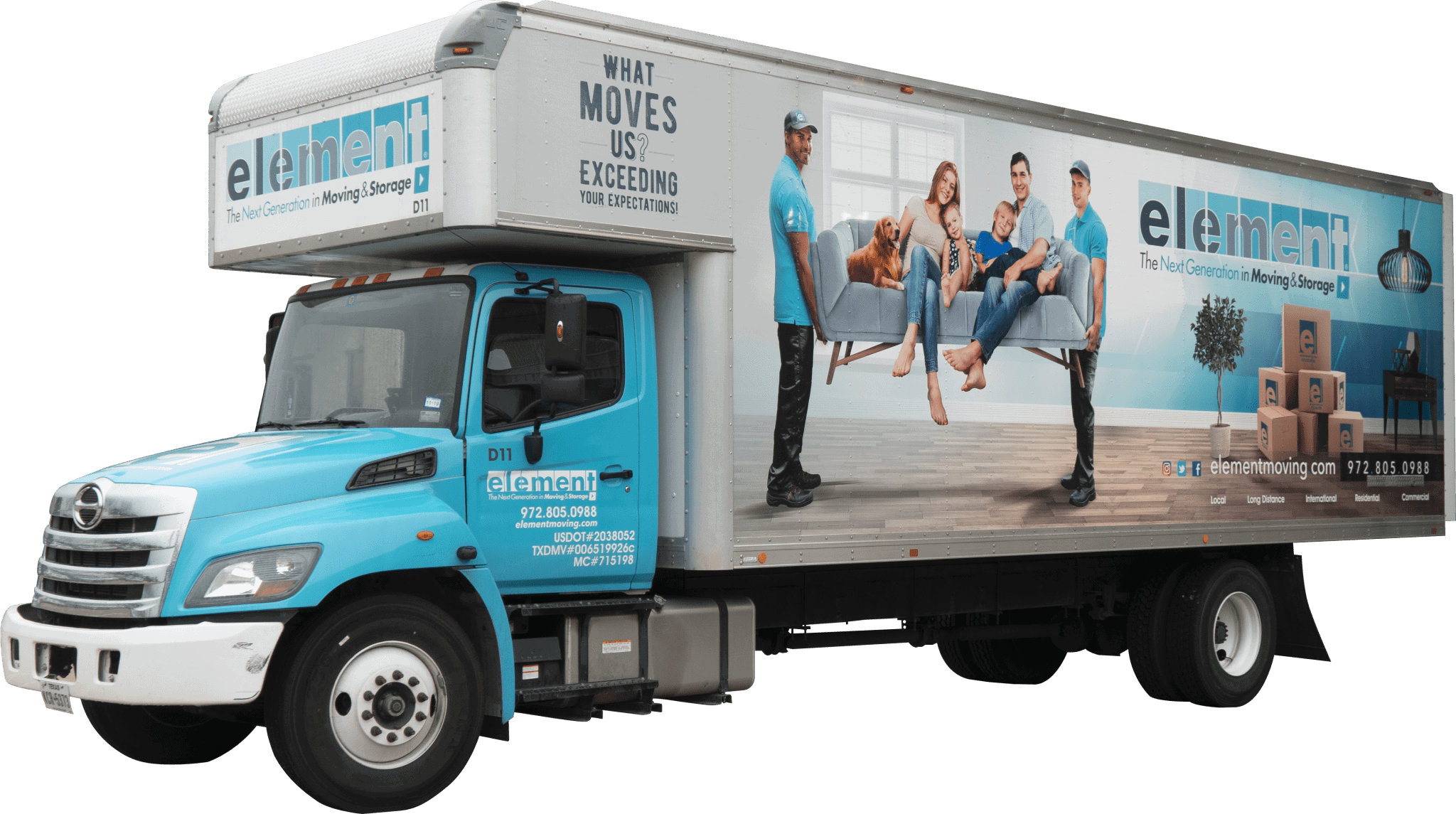
Your home gym represents a significant investment in your health and thousands of dollars in equipment. Here’s how to safely relocate treadmills, weight machines, and fitness gear without injury or damage—from Dallas’s trusted moving experts.
Why Home Gym Equipment Is Among the Hardest Items to Move
At Element Moving & Storage, we’ve moved everything from grand pianos to gun safes, but home gym equipment presents unique challenges that catch most DIY movers off-guard.
The three-part problem:
- Extreme weight: A single treadmill weighs 200-350 pounds; power racks can exceed 500 pounds
- Awkward dimensions: Equipment is designed to stay in one place, not navigate stairs and doorways
- Delicate electronics: Modern equipment has computers, motors, and calibration systems that damage easily
The stakes are high: We’ve seen people injure themselves moving treadmills, damage flooring dragging equipment, and completely ruin $3,000 ellipticals by improper disassembly. Since the home fitness boom of 2020, we’ve relocated hundreds of home gyms throughout Dallas-Fort Worth—and we’ve learned what works and what causes expensive problems.
This guide shares professional techniques to move your fitness equipment safely, whether you’re relocating across Dallas or making a long-distance move to a new state.
Pre-Move Planning: The 2-Week Preparation
Inventory and Measure Everything
Create a detailed list:
- Equipment type and brand/model
- Approximate weight (check manufacturer specs)
- Dimensions (height, width, depth)
- Power requirements (some equipment needs dedicated circuits)
Measure your new space:
- Doorway widths (most are 30-36 inches; some equipment is 40+ inches wide)
- Ceiling height (especially for power racks and cable machines)
- Stairway width and turns
- Distance from entry to gym location
Critical question: Will your equipment actually fit through the new home’s doors? We’ve encountered situations where treadmills needed to be disassembled to fit—something people don’t realize until moving day.
Locate Original Manuals and Hardware
Why this matters: Most equipment requires specific disassembly sequences. Removing parts in the wrong order can damage internal mechanisms or make reassembly impossible.
Find these resources:
- Original assembly manuals (check manufacturer websites if you don’t have them)
- Warranty information (moving may void warranties if done improperly)
- Customer service contact (for reassembly questions)
- YouTube assembly videos (watch them in reverse for disassembly guidance)
Gather Proper Moving Equipment
Don’t attempt moving gym equipment without:
- Furniture dolly rated for 600+ pounds
- Moving straps or lifting harnesses
- Socket wrench set with multiple sizes
- Allen wrench/hex key set
- Zip-lock bags for hardware
- Permanent marker for labeling
- Moving blankets (protect floors and equipment)
- At least 2-3 strong helpers (never move alone)
Professional tip: The $50 you spend on a quality furniture dolly will save thousands in medical bills and equipment damage.
Moving Treadmills: The Most Common Home Gym Item
Understanding Treadmill Construction
Modern treadmills have three main components:
- Console/computer system – fragile electronics
- Motor and belt system – heavy, sensitive to jarring
- Frame and deck – structural support
Weight distribution: Most weight is in the front where the motor sits. This creates balance issues when moving.
Treadmill Disassembly Steps
Step 1: Unplug and secure the power cord
- Wrap cord and tape to the frame
- Remove from any wall outlets or surge protectors
Step 2: Fold the deck (if foldable)
- Most modern treadmills fold up and lock
- Engage the folding lock mechanism
- This reduces length by 2-3 feet
Step 3: Remove the console (critical for protection)
- Photograph all wire connections before disconnecting
- Use proper tools to remove mounting bolts
- Disconnect wires carefully (don’t yank)
- Wrap console separately in bubble wrap
- Transport console in your vehicle, not the truck
Step 4: Remove any loose accessories
- Water bottle holders
- Tablet/phone holders
- Safety key (keep with console)
Non-folding treadmills: You may need to remove the deck entirely. This requires 2-3 people and careful attention to hydraulic lift systems. Consider professional help for non-folding models.
Moving Day: Treadmill Transport
Loading technique:
- Position furniture dolly at the front (motor end)
- Two people tilt treadmill back onto dolly
- Secure with moving straps – wrap around frame and dolly
- Third person guides from front while two people control from behind
- Take stairs slowly – one step at a time, controlled descent
Doorway navigation:
- Measure width before attempting
- Tilt at an angle if needed
- Remove door from hinges if absolutely necessary
- Protect door frames with cardboard
In the truck:
- Stand treadmill upright against wall
- Secure with straps to prevent shifting
- Don’t stack anything on top
- Use blankets to protect console area
Common mistake to avoid: Never lay a treadmill flat on its back. This puts stress on the belt system and can damage internal components.
Moving Ellipticals: The Balance Challenge
Why Ellipticals Are Tricky
Ellipticals have:
- Top-heavy design – pedal arms extend upward
- Multiple moving parts – pedals, arms, resistance mechanisms
- Awkward footprint – wide and tall simultaneously
- Weight range: 100-200 pounds typically
Elliptical Disassembly
Essential steps:
- Remove pedal arms – usually 4-6 bolts per arm
- Label left and right (they’re not interchangeable)
- Keep all hardware in labeled bags
- This reduces height by 12-18 inches
- Remove console (same as treadmill)
- Photograph wire connections
- Disconnect carefully
- Pack separately and transport personally
- Remove resistance knob if external
- Prevents breakage during move
- Secure any loose parts
- Tape down water bottle holders
- Secure power cord
Some ellipticals don’t disassemble easily. If your model has sealed construction, you’ll move it intact—which means carefully measuring doorways first.
Transport Strategy
Best approach:
- Keep base on furniture dolly
- Two people control balance (one on each side)
- Move slowly through tight spaces
- Use ramps for stairs whenever possible (safer than carrying)
Warning: Ellipticals tip easily when moving. Never let one person attempt this alone.
Moving Weight Machines and Power Racks
Free-Standing Power Racks
Weight: 300-600 pounds Challenge: Pure mass with awkward grip points
Moving process:
- Remove all weight plates – never move with weights attached
- Remove pull-up bars if detachable
- Remove safety spotter arms
- Measure doorways – racks are often 48-50 inches wide
- Use heavy-duty dolly and three people minimum
If the rack won’t fit through doors: You may need to unbolt the uprights from the base and move in sections. Check manufacturer instructions.
Cable Machine Systems
These are complex: Multiple pulleys, cables under tension, weight stacks.
Professional recommendation: Unless you’re mechanically skilled, hire professionals for cable machines. One misplaced cable can make the machine unusable, and recalibration requires expertise.
If you must move it yourself:
- Photograph the entire cable routing system from multiple angles
- Release all tension from cables
- Mark each cable’s origin and destination point
- Remove weight stack and transport separately
- Disassemble frame only if manufacturer recommends it
Multi-Station Home Gyms (Bowflex, Total Gym, etc.)
These vary wildly by brand. General principles:
- Follow manufacturer disassembly instructions exactly
- Label every piece (these have dozens of parts)
- Keep hardware organized by section (use labeled bags)
- Take photos at each disassembly step
- Don’t force anything – if it doesn’t come apart easily, you’re doing it wrong
Moving Free Weights and Accessories
Weight Plates and Dumbbells
The weight problem: A complete weight set can exceed 1,000 pounds. This creates loading and transportation challenges.
Packing strategy:
For weight plates:
- Use small, sturdy boxes (no larger than milk crate size)
- Put 50-75 pounds max per box
- Label weight on outside of box
- Load in truck bed or floor (never on shelves)
For dumbbells:
- Pack in small boxes by weight pairs
- Wrap rubber/urethane dumbbells to prevent scuffing
- Cast iron can go unwrapped
- Maximum 2-3 pairs per box
Safety warning: Weight boxes are deceptively heavy. People hurt their backs lifting boxes that look manageable but contain 60+ pounds. Always label the weight clearly.
Weight Benches and Racks
Adjustable benches:
- Fold to flat position
- Remove any loose pad attachments
- Wrap in moving blanket to protect upholstery
Squat stands and bench press racks:
- Disassemble if possible
- Secure any adjustable parts
- Move carefully (they’re awkward shapes despite relatively low weight)
Barbells and Specialty Bars
Standard 7-foot Olympic bars:
- These don’t disassemble
- Wrap in moving blankets
- Can lay flat in truck
- Don’t stack heavy items on top (can bend bars)
Specialty bars (trap bars, safety squat bars, curl bars):
- Wrap each individually
- Keep with main barbell
- Consider using a mattress box for long bars
Moving Cardio Equipment Beyond Treadmills
Stationary Bikes and Spin Bikes
Relatively easy to move:
- Remove pedals (usually reverse-threaded)
- Lower seat to minimum height
- Turn handlebars parallel to frame
- Most weigh 80-150 pounds
Peloton and connected bikes:
- Remove tablet/screen and pack separately (very expensive component)
- Follow Peloton’s official moving guide
- Consider Peloton’s professional moving service if under warranty
Rowing Machines
Type matters:
Air rowers (Concept2):
- Separate into two pieces (slides apart easily)
- Very portable once separated
Water rowers:
- Drain water tank completely (critical)
- Store drain plug safely
- Transport upright if possible
Magnetic rowers:
- Usually fold for storage
- Keep in folded position for moving
Stair Steppers and Climbers
Similar to ellipticals:
- Remove console/computer
- Secure pedals and moving parts
- Top-heavy design requires careful balance
Protecting Floors During Equipment Moves
The Damage We See Most Often
Common floor damage from DIY gym moves:
- Gouges in hardwood from dragging
- Cracked tiles from dropped weights
- Carpet tears from equipment wheels
- Subfloor damage from concentrated weight
Prevention strategies:
- Create a protective path:
- Lay cardboard or moving blankets on floor
- Tape edges so they don’t slide
- Cover entire route from gym to exit
- Use proper dollies:
- Rubber wheels protect better than hard plastic
- Wide wheel base distributes weight
- Lock wheels when positioning equipment
- Lift, don’t drag:
- Even an inch of dragging can gouge floors
- Use furniture sliders under equipment feet
- Get enough people to fully lift
- Protect doorways and corners:
- Tape cardboard to door frames
- Place padding on corner walls
- Remove doors from hinges if clearance is tight
Professional advantage: Element Moving & Storage includes floor protection in every move. Our teams carry specialized equipment pads and know how to navigate equipment without floor damage—something we see frequently from DIY attempts.
Setting Up Your Home Gym in the New Location
Room Preparation
Before moving equipment in:
- Install rubber flooring (if planned) – much harder after equipment is positioned
- Verify electrical requirements – some equipment needs 20-amp dedicated circuits
- Check ventilation – gyms need good airflow
- Plan mirror installation – easier before heavy equipment is present
- Test floor levelness – unlevel floors cause treadmill calibration issues
Equipment Placement Strategy
Optimal layout considerations:
- Treadmills near windows (natural light and ventilation)
- Power racks away from mirrors (safer)
- Adequate clearance around cardio equipment (36 inches recommended)
- Weight storage near where you use weights
- Consider exercise flow (cardio to weights, etc.)
Reassembly Tips
Follow this sequence:
- Reference your photos at every step
- Don’t force pieces – if it’s difficult, you’re doing it wrong
- Hand-tighten bolts first, then use tools for final tightening
- Calibrate electronic equipment after setup (treadmills especially)
- Test everything before your first workout
When to call for help: If equipment doesn’t work properly after reassembly, contact the manufacturer before assuming you’ve broken something. Many issues are simple calibration problems.
When to Hire Professional Movers for Gym Equipment
Consider Professional Help If:
- Equipment weighs over 300 pounds
- You have stairs at either location
- You’re moving high-end equipment (Peloton, Technogym, Precor)
- You have multiple large machines
- You have any physical limitations
- You’re making a long-distance move
- Your equipment is under warranty (DIY moving may void it)
What Element Moving & Storage Offers
Specialized fitness equipment moving:
- Professional disassembly and reassembly following manufacturer specs
- Heavy-duty equipment rated for 1,000+ pound items
- Floor protection systems for both homes
- Insurance coverage for your valuable equipment
- Experienced crews who’ve moved hundreds of home gyms
- Proper tools for every equipment type
Real cost comparison:
- Treadmill disassembly service: $100-200
- Equipment dolly rental: $30-50/day
- Floor repair from DIY damage: $500-2,000
- Emergency room visit from lifting injury: $1,500-5,000
- Professional moving service: Often less than the cost of potential problems
Insurance and Liability Considerations
Questions to Ask Before Moving Gym Equipment
Warranty coverage:
- Does self-moving void the manufacturer warranty?
- Does the manufacturer offer moving services or recommendations?
- Is professional moving required to maintain warranty?
Insurance:
- Does your homeowners insurance cover damage during self-move?
- What coverage does a professional moving company provide?
- Should you purchase additional valuation coverage for expensive equipment?
Peloton and connected fitness: These companies often require professional moving to maintain warranty and connectivity support. Verify before attempting DIY.
Common Equipment-Specific Challenges
NordicTrack treadmills: Known for complex console systems—professional removal recommended
Bowflex home gyms: Rod resistance systems require careful cable routing—keep detailed photos
Concept2 rowers: Easiest equipment to move—separates into two lightweight pieces
Assault bikes: Relatively simple but protect the fan mechanism during transport
Keiser spin bikes: Expensive bikes with magnetic resistance—handle console with extreme care
Your Home Gym Moving Checklist
2 Weeks Before:
1 Week Before:
Moving Day:
New Location:
Let the Professionals Handle Your Home Gym Move
Moving fitness equipment is one area where professional help pays for itself through injury prevention, equipment protection, and time savings. At Element Moving & Storage, we treat your $10,000 home gym with the same care we give to fine art and antiques.
Our Dallas-area moving teams have successfully relocated everything from basic treadmills to complete commercial-grade home gyms. We understand the mechanics, have the equipment, and carry the insurance to protect your investment.
Don’t risk your health or your equipment on a DIY move that saves a few hundred dollars but costs thousands in damage or injury.
Ready to move your home gym safely?
Contact Element Moving & Storage:
- Get a free quote for fitness equipment moving
- Ask about our disassembly and reassembly services
- Learn about our equipment coverage options
- Schedule with Dallas’s trusted moving professionals