

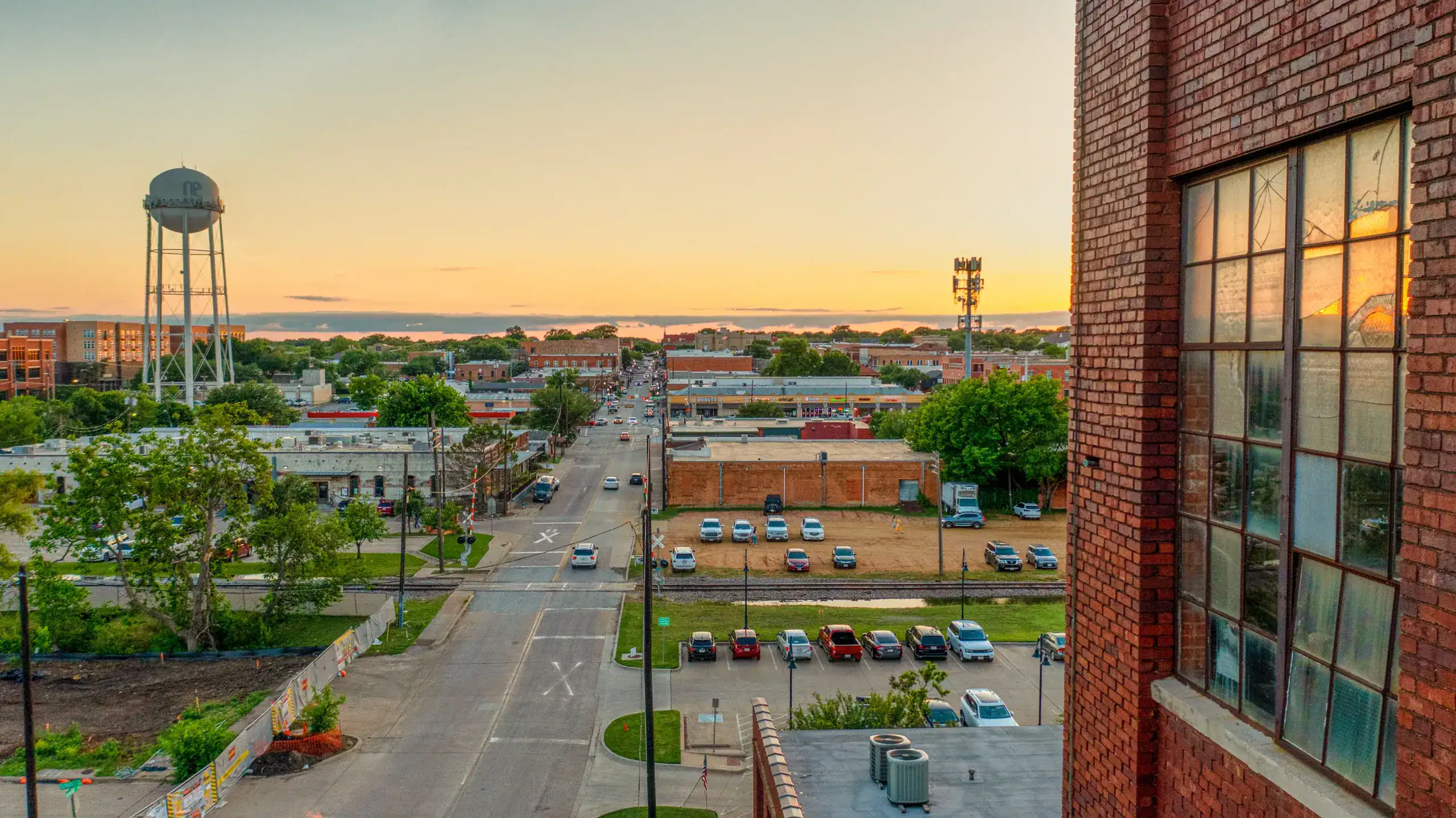
The Best Dallas Suburbs in 2026, According to 1,400 Quote Requests

Most rankings of the best Dallas suburbs are assembled from the same three inputs: school grades, a crime table and a realtor’s opinion. This one is built from the quote requests we received through August 2026, and it ranks the suburbs of Dallas by where people actually asked to be moved. It is not the usual list. Celina, The Colony, Aubrey, Colleyville and Midlothian gain requests. Plano, Frisco and Irving send us more requests out than in.
That is one mover’s data, not a verdict on Plano, but it is worth knowing before you commit to a Dallas suburb. If you want the city itself, see the best neighborhoods in Dallas instead.
How We Ranked the Suburbs of Dallas
This list of the best suburbs of Dallas ranks incorporated cities in Dallas, Collin, Denton, Tarrant, Ellis and Rockwall counties, excluding the two principal cities (Dallas and Fort Worth) and Arlington, which is its own job market rather than a Dallas suburb. Out-of-metro destinations (Austin, Charlotte) are excluded because nobody hires a Dallas mover to leave them.
Each suburb then gets two numbers from the 1,445 quote requests we received through August 31, 2026: inbound requests (demand) and net (inbound minus outbound). Tier 1 is a net of +3 or better on at least 8 inbound. Tier 2 is 20 or more inbound with a net between -5 and +2. Tier 3 is a net of -9 or worse on 27 or more inbound; Carrollton just clears that bar on both numbers. Under 8 inbound is an anecdote, not a ranking.
A quote request is not a move, and this is not a census. Most of our requests start in Dallas County, so suburbs next to Dallas, and the ones Dallas leavers pass through on the way further out (Plano, Frisco, Irving), show more outbound here than a metro-wide count would. A Plano family headed to Celina hires a Dallas-area mover; a Celina family headed to Plano often does not. Out-of-metro destinations like Austin look inflated for the same reason and are left out of the ranking.
The Census Bureau’s 2025 estimates point the same way for the big movers: Plano, Irving, Garland, Carrollton, Allen, Coppell and Southlake all lost population between mid-2024 and mid-2025, while Celina, Princeton, Melissa, Midlothian, Little Elm, McKinney and Aubrey grew. The exceptions are Flower Mound and Colleyville, which gain requests here but lost a few hundred residents each. Home values below are Census medians from the 2020 to 2024 survey; our property tax guide for new homeowners explains the tax stacks.
| Tier | Suburb | Inbound Requests | Net | Verdict |
|---|---|---|---|---|
| 1 | The Colony | 23 | +9 | The trade between Plano and Frisco, at a discount to both |
| 1 | Garland | 22 | +5 | Cheapest house here, with rail; highest rate printed here |
| 1 | Celina | 19 | +14 | Grew 277% since 2020, the fastest here; new-build, MUD-heavy |
| 1 | Aubrey | 16 | +7 | Small town, 38 miles out, cheapest Denton County entry |
| 1 | Little Elm | 12 | +3 | Lakefront Frisco overflow |
| 1 | Flower Mound | 11 | +4 | The one suburb every list agrees on |
| 1 | Colleyville | 8 | +6 | Quiet, expensive, lowest city and ISD rates of the fifteen |
| 1 | Midlothian | 8 | +6 | The only southern suburb in Tier 1 |
| 2 | McKinney | 58 | -2 | Second-most requested, stickiest after Plano |
| 2 | Allen | 23 | -4 | Where Plano leavers go; A-rated ISD, highest rate of the big three |
| 2 | Richardson | 22 | -2 | Best commute-to-price ratio, with rail |
| 3 | Plano | 73 | -19 | Most requested suburb, and a net exporter to the next ring |
| 3 | Irving | 38 | -21 | Closest and cheap, and the widest gap between out and in |
| 3 | Frisco | 38 | -18 | A-rated ISD, highest prices, traffic both ways |
| 3 | Carrollton | 27 | -9 | Rail-served, mid-priced, more out than in; just clears the bar |
Tier 1: The Dallas Suburbs Gaining Quote Requests
Eight suburbs cleared the bar. Four are in Denton County (The Colony, Aubrey, Little Elm, Flower Mound) and a fifth, Celina, sits on the Collin-Denton line. Denton is the only one of the four core counties with a positive net here, at +16.
The Colony (23 In, +9)
The Colony sits between Plano and Frisco on Lewisville Lake, and it is where those two trade: three requests in from Plano, three from Frisco, four out to Frisco. Small counts, but they point one way, and the price gap is the first place to look. The median home value is $383,900, about $80,000 under Plano and $260,000 under Frisco. Lewisville ISD serves it.
Garland (22 In, +5)
Garland is the biggest net gainer in Dallas County and the only Dallas County suburb that clears the Tier 1 bar. The draw is a median home value of $270,800, the cheapest of the fifteen profiled suburbs, on the DART Blue Line, in Garland ISD. The catch: for tax year 2025, the most recent fully adopted year, the combined rate is roughly 2.39% before exemptions, the highest printed in this post, because the Dallas County layers are on the bill. Know the rate before moving to Garland.
Celina (19 In, +14)
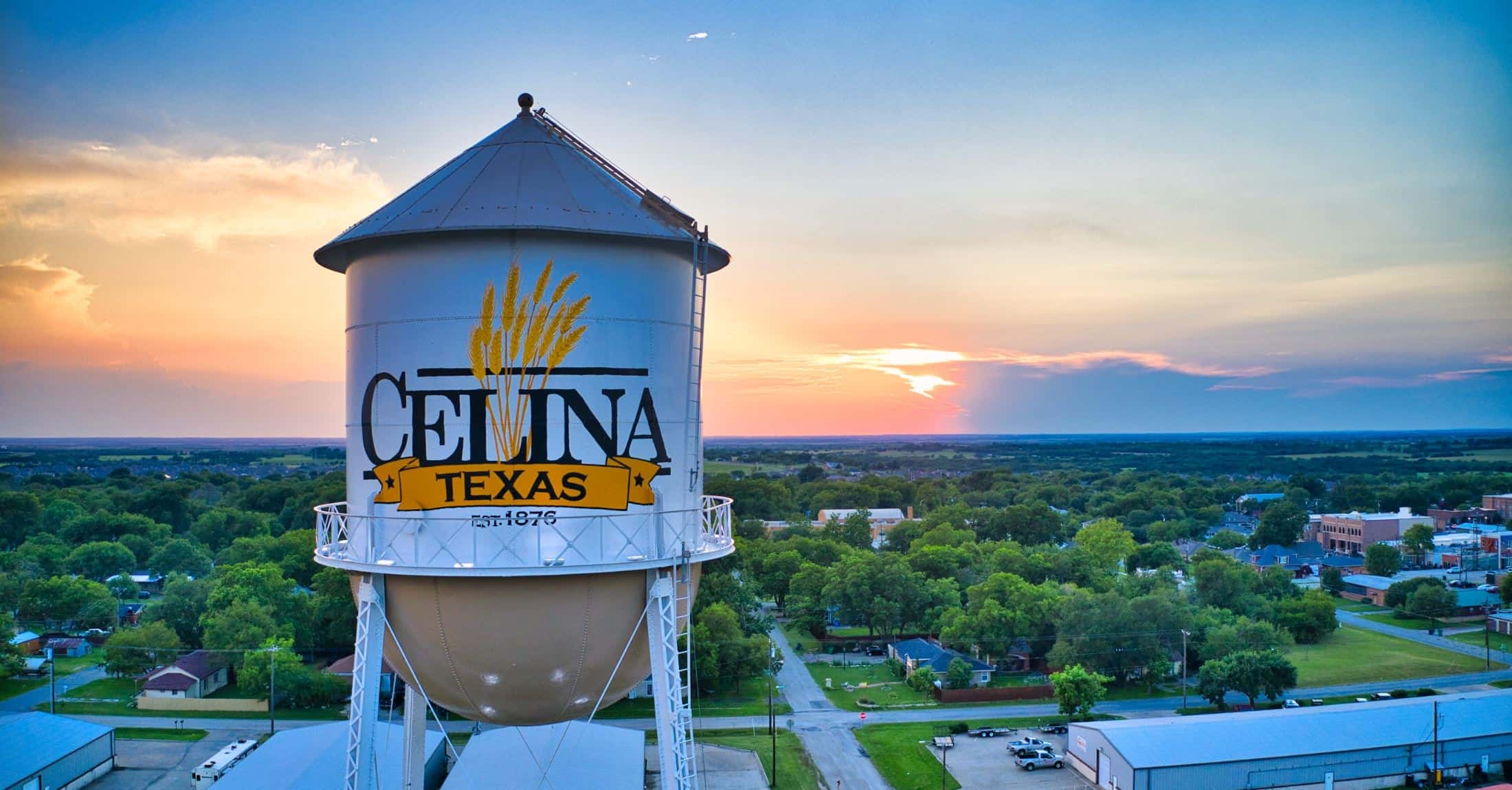
Celina posted the biggest net gain in the data, 19 in against 5 out. Per the Census Bureau’s 2025 estimates it grew from 17,099 residents in 2020 to 64,427 in 2025, up 277%, the fastest here. The median home value is $509,600; Orchard’s 30-day median sale price was $471,990 as of September 2026, down 14% year over year on a new-build mix. Celina ISD scored a B, 85, in the Texas Education Agency’s 2026 ratings. For tax year 2025, the most recent fully adopted year, the combined rate is about 2.0% before any MUD or PID, and new-build subdivisions in Celina, Little Elm, Aubrey and Prosper often add one, sometimes $0.80 to $1.20 more per $100; ask before you sign. Celina was on our rising cities list, and our Celina moving crew knows the subdivisions.
Aubrey (16 In, +7)
Aubrey is the small-town answer: 9,066 people per the Census Bureau’s 2025 estimates, up 85% since 2020, still a town, 38 miles out. The median home value is $345,000, the cheapest Tier 1 home in Denton County. Aubrey ISD and Denton ISD split the town. Sixteen in against nine out is a real signal for a place this size.
Little Elm (12 In, +3)
Little Elm is the Frisco overflow with lake frontage, up 36% since 2020 per the Census Bureau. Three Frisco leavers asked for it, an anecdote at that count, but the direction matches the price gap: $420,700 against Frisco’s $642,100. Little Elm ISD serves the town, with parts zoned to Frisco ISD or Denton ISD.
Flower Mound (11 In, +4)
Flower Mound is the one suburb every method agrees on. US News ranked it #3 nationally in May 2026, Niche has it #2 in the metro, and it gains here on 11 inbound. The median home value is $560,200, in Lewisville ISD. One footnote: the Census Bureau’s 2025 estimates show it lost about 400 residents last year.
Colleyville (8 In, +6)
Colleyville sent us two outbound requests, a tiny count, against eight inbound, enough to rank. The median home value of $784,900 is third behind Southlake and Prosper. For tax year 2025, the most recent fully adopted year, the city rate of $0.311931 per $100 and the Grapevine-Colleyville ISD rate of $0.8686 are the lowest city and ISD rates of the fifteen profiled suburbs, and GCISD moved up to an A, 91, in TEA’s 2026 ratings.
Midlothian (8 In, +6)
Midlothian is the only southern suburb in Tier 1. It is in Ellis County, up 33% between 2020 and 2025 per the Census Bureau, with a median home value of $411,800 and Midlothian ISD. Eight in and two out is a small sample, but it is the same shape as Colleyville: hardly anyone asks to leave.
Tier 2: The Big Suburbs Holding Their Own
McKinney (58 In, -2)
McKinney is the second-most requested suburb and the stickiest after Plano: 24 quote requests started and ended inside McKinney. It trades with Plano (four in, three out) and Allen (three each way). The median home value is $471,800. McKinney ISD earned a B, 87, in TEA’s 2026 ratings. For tax year 2025, the most recent fully adopted year, the combined rate is roughly 1.75% before exemptions. Our McKinney moving crew and our guide to everything you need to know about moving to McKinney cover the rest.
Allen (23 In, -4)
Allen is where Plano leavers go. Six quote requests ran from Plano to Allen, the biggest suburb-to-suburb route here. Allen ISD holds an A in TEA’s 2026 ratings. The median home value is $464,100, the cheapest of the big three, and the tax stack is the highest of the three, because Allen ISD’s rate is $1.1258 per $100 for tax year 2025, the most recent fully adopted year. Allen dipped 0.3% last year per the Census Bureau. Allen is holding, not growing.
Richardson (22 In, -2)
Richardson is the commute pick: 14.5 miles from downtown, with the DART Red, Orange and Silver lines. The median home value is $431,400. Richardson ISD moved from a C to a B, 83, in TEA’s 2026 ratings. The trade-off: for tax year 2025, the most recent fully adopted year, the Dallas County stack puts the combined rate at roughly 2.18% before exemptions. Richardson is hard to beat for a rail commute at a mid-range price.
Tier 3: The Suburbs Sending Us More Requests Out Than In
Plano is the most requested destination in this data. Irving and Frisco are third and fourth by inbound, and Carrollton sixth (Fort Worth, excluded by the roster rule, sits fifth). People want in. More people want out, mostly to the next ring. The bias above applies; they still come out net negative.
Plano (73 In, -19)
Plano is the most requested suburb and still sent us more requests out than in: 73 inbound, 30 more that started and ended inside Plano, and 92 out. The leavers mostly went one ring further out, to Allen (6), McKinney (4) and The Colony (3); three went the other way, to Richardson. Plano ISD scored a B, 85, in TEA’s 2026 ratings. US News ranks Plano #63 nationally; the Census Bureau shows it slipped 0.1% last year. A Plano moving crew will tell you the housing stock runs 1980s to 2000s.
Irving (38 In, -21)
Irving has the worst net in this post: 38 in, 59 out. It is the closest profiled suburb to downtown, about 11.5 miles, and the second cheapest, with a median home value of $315,600, DART’s Orange Line and Las Colinas. Leavers went to Grapevine (4) and McKinney (3). Irving ISD is the district. For tax year 2025, the most recent fully adopted year, the combined rate is roughly 2.14% before exemptions. Cheap and close keeps Irving drawing.
Frisco (38 In, -18)
Frisco has traffic both ways. Leavers went to Plano (4), Little Elm (3) and The Colony (3); arrivals came from Richardson (4) and The Colony (4). Frisco ISD scored an A, 91, in TEA’s 2026 ratings. The price: a median home value of $642,100, and an Orchard 30-day median sale price of $680,000 as of September 2026, up 7.9% year over year. Growth slowed to 0.8% last year after 18.2% over five, per the Census Bureau. Frisco is no longer the growth story; it is the finished product, priced like one.
Carrollton (27 In, -9)
Carrollton just clears the Tier 3 bar on both numbers: 27 inbound, net -9. Ten of its inbound came from Dallas city; 36 went out. It has the DART Green and Silver lines, a median home value of $381,000, and Carrollton-Farmers Branch ISD, a B, 81, in TEA’s 2026 ratings. For tax year 2025, the most recent fully adopted year, the combined rate is roughly 2.02% before exemptions. Carrollton is rail-served, mid-priced, and sends out more requests than it takes in; the data does not say where they go.
Plano vs Frisco vs Allen
The three north Dallas suburbs people compare most are all in Collin County. For tax year 2025, the most recent fully adopted year, all three sit in a combined band of roughly 1.68 to 1.77% before exemptions: Frisco 1.68%, Plano 1.71%, Allen 1.77%. Plano is the only DART member city of the three, and all three districts are rated A or B by TEA for 2026. Populations per the Census Bureau’s 2025 estimates: Plano 293,028, Frisco 236,955, Allen 113,447.
- Plano if you want the shortest drive, rail and the widest price range, accepting that the housing stock is 1980s to 2000s and the city rate went up in 2025.
- Frisco if schools decide it (A, 91) and you can pay $640,000 and up and drive everything; the data shows about as many requests leaving it for Plano, Little Elm and The Colony (10) as arriving from Richardson and The Colony (8).
- Allen if you want the cheapest median of the three by Census and an A-rated ISD, accepting the highest tax stack of the three; it is where Plano leavers go.
In this data the flow runs from Plano one ring out, to Allen first.
Not Ranked, Still Worth Knowing
Coppell tops Niche’s list; in our data more people asked to leave it (13) than to move there (10), and the Census Bureau says it has shrunk 3.7% since 2020. Southlake drew too few requests to rank, six out and three in, with Carroll ISD at an A, 93; see the Southlake page and our Carroll ISD guide. Grapevine took 10 inbound, net -4. Rockwall took 14, net -4. Prosper took 12, net -1, on a median of $823,700. Arlington (23 in, -1) and Fort Worth (32 in, -5) would clear Tier 2 but are excluded by the roster rule: a principal city and its own job market. Denton (6 in, -7): see moving to Denton. Lewisville (+2) and Grand Prairie (+1) just missed Tier 1 on net.
Frequently Asked Questions About Dallas Suburbs
What Are the Best Suburbs in Dallas?
By quote demand, the five that gained the most on net are Celina (+14), The Colony (+9), Aubrey (+7), Colleyville (+6) and Midlothian (+6). On Niche’s 2026 list the top five are Coppell, Flower Mound, Colleyville, Frisco and University Park. Colleyville is on both. If schools decide it, the best Dallas suburbs for families here have A-rated districts: Frisco, Allen, Colleyville and Southlake.
What Is the Most Affordable Suburb of Dallas?
Garland, with a median home value of $270,800, then Irving at $315,600 and Aubrey at $345,000. Garland’s combined tax rate, the highest printed in this post, narrows the gap on the monthly bill. Our post on the 10 most affordable places to live in the Dallas area goes deeper.
What Are the Affluent Suburbs of Dallas?
By median home value: Southlake ($1,014,500), Prosper ($823,700), Colleyville ($784,900) and Frisco ($642,100). Inside the city’s own footprint, the Park Cities are the equivalent: Highland Park and University Park are separate municipalities inside Dallas’s footprint, not suburbs of it.
Which Suburbs of Dallas Are Considered the Safest?
We rank by moving demand, not crime, and we are not going to name a safest suburb. The crime tables behind most lists are FBI UCR data with uneven reporting, a poor basis for a ranking. Check the Texas DPS crime portal for the city you are considering.
Which Dallas Suburbs Are Growing Fastest?
Per the Census Bureau’s 2025 estimates, growth since 2020: Celina +277%, Princeton +156%, Melissa +116%, Aubrey +85%, Prosper +51%, Little Elm +36% and Midlothian +33%. All but Midlothian are north of the city on the Collin and Denton side of the metro.
How Far Are the Suburbs From Downtown Dallas?
As the crow flies, from each city’s Census centroid to downtown: Irving 11.5 miles, Garland 13, Richardson 14.5, Carrollton 16, Plano 19, Colleyville 22, The Colony 22.5, Allen 24, Flower Mound 26, Frisco 26, Little Elm 30, McKinney 30, and Celina and Aubrey 38. Drive times depend on the corridor, the hour and the tollway.
Choosing Among the Best Suburbs to Live in Dallas
Which of these is the best suburb depends on which number you weight: net demand, the tax stack, the district letter or the miles. The fifteen above give you all four.
Pick the suburb on the numbers that matter to you, then let a Dallas local moving crew handle the part that does not need a spreadsheet.
Ready To Move?
We Make It Easier.
This ranking comes from where people asked us to take them, which makes it a map of where Dallas is actually heading. Get a free quote from Element for a move into Celina, The Colony or any other suburb on the list.
get a free quote